


Industrial floors face more than chemical corrosion. Acid spills, forklift traffic, frequent washing, and poor drainage can damage floor linings and expose the concrete beneath. Once chemicals penetrate the lining, repairs can become costly and disrupt production. Choosing the right acid resistant bricks requires more than checking the acid resistance rating. You also need to evaluate chemical exposure, mechanical loads, brick specifications, mortar compatibility, and installation conditions.
What Challenges Do Industrial Floors Face?
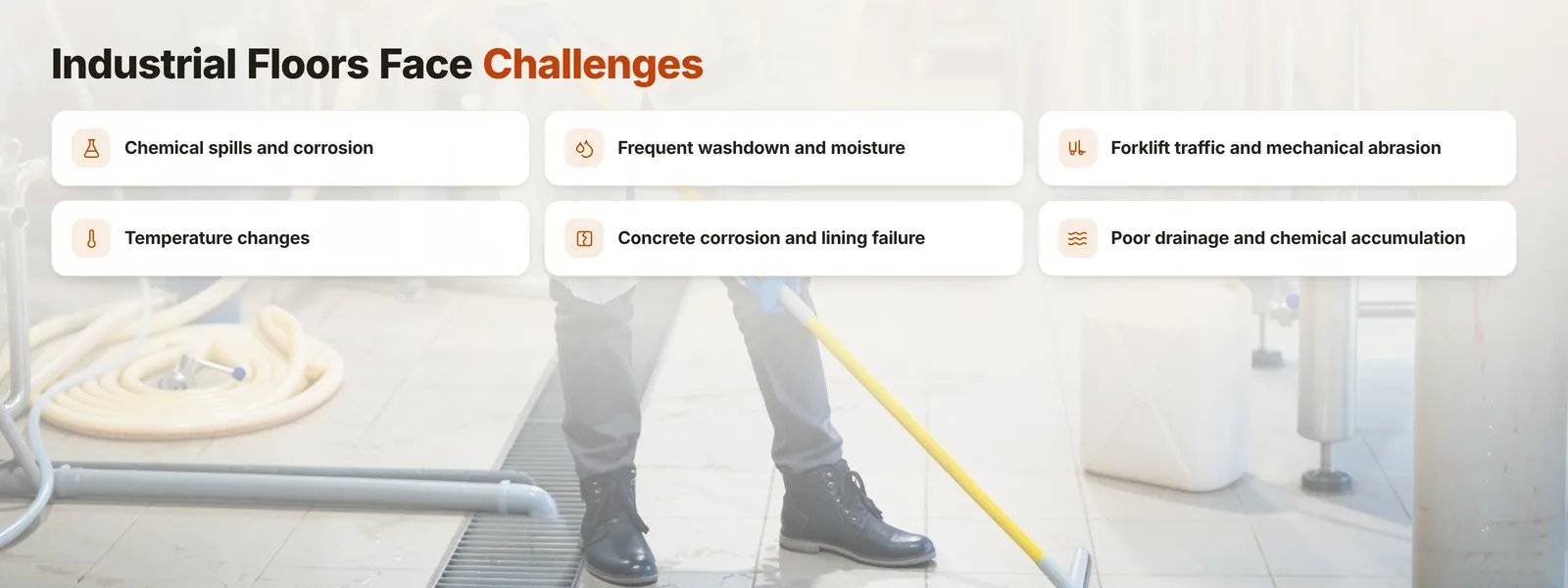
Industrial floors must withstand chemical exposure, moisture, mechanical loads, and changing operating conditions. All of these conditions can vary significantly depending on the specific industry, production processes, and cleaning routines involved. Understanding these challenges in detail helps you select suitable acid resistant bricks type and reduce the risk of premature floor damage.
Identify the Chemicals and Operating Conditions
Chemical compatibility should be the first step in product selection. Acid resistant bricks are resistant to most acids and weak alkalis. A brick that performs well in one acid may not provide the same protection in another chemical environment. For example, a floor exposed to occasional dilute acid splashes has different requirements from a floor beside a tank containing hot, concentrated acid.
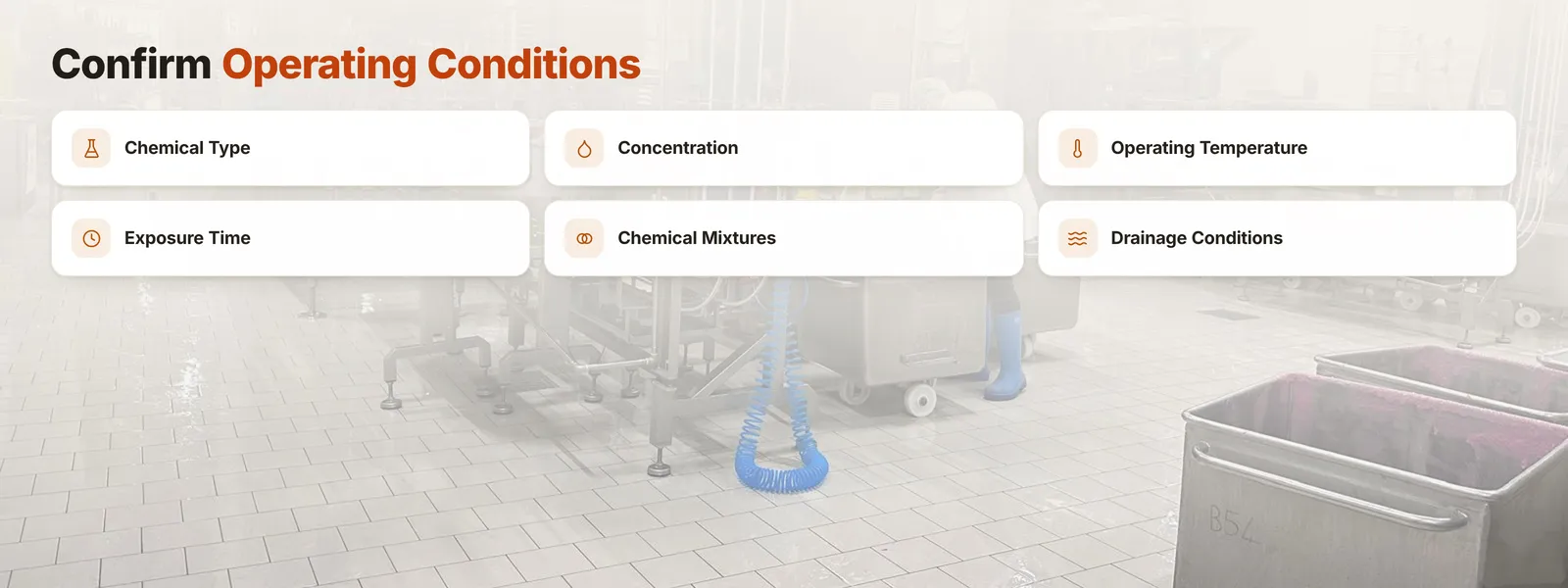
Before requesting a quotation, prepare a list of the following operating conditions.
- Chemical type: Identify each acid, alkali, solvent, and cleaning agent that may contact the floor.
- Concentration: Record the normal concentration and the maximum concentration during spills or cleaning.
- Operating temperature: Include normal temperatures, peak temperatures, and temperature changes.
- Exposure time: Distinguish occasional splashes from continuous contact or standing liquid.
- Chemical mixtures: Identify mixed process liquids and cleaning solutions.
- Drainage conditions: Note areas where liquids collect, flow, or remain in contact with the lining.
Do not select bricks based only on the name of the chemical. Request test data for the relevant chemical conditions and confirm the compatibility of the complete lining system, including the acid resistant mortar. If the chemical composition is uncertain, obtain the process liquid’s safety data sheet (SDS) and consult the project engineer or material supplier before finalizing the specification.
Evaluate the Required Mechanical Performance
Acid resistance alone does not make a brick suitable for heavy-duty industrial flooring. Mechanical performance, substrate stability, and installation quality also affect service life—a chemically resistant brick can still fail under heavy loads, and even a good brick may underperform if the substrate is unstable or installation is poor.
Check the Load Conditions
- Identify all equipment operating on the floor, including forklifts, pallet trucks, loaded carts, and stationary machinery, to establish the expected mechanical demands during daily industrial operations.
- For forklift areas, record maximum vehicle weight, wheel loads, tire types, and traffic frequency, paying particular attention to turning and braking zones where additional surface stresses may occur.
- For heavy machinery, determine whether loads are distributed evenly or concentrated at individual support points, ensuring that the floor structure can withstand the expected operating conditions safely.
Review Bending Strength and Abrasion Exposure
- Bending strength indicates a brick’s resistance to flexural stress. REBO Z-1 acid resistant bricks have a specified bending strength of ≥58.8 MPa, providing a useful reference for evaluating industrial flooring applications.
- Bending strength alone cannot determine the load capacity of a completed floor. Brick thickness, mortar performance, substrate stability, and load distribution must also be assessed to ensure reliable mechanical performance.
- Abrasion resistance is important in areas exposed to repeated forklift movements, sliding materials, and impact. Request relevant wear test data to verify suitability for the expected traffic and material handling conditions.
Check Chemical Resistance and Water Absorption
- Industrial floors frequently encounter mechanical loads and chemical exposure simultaneously. REBO Z-1 acid resistant bricks have a specified acid resistance of ≥99.8% and water absorption of ≤0.2%, supporting initial product evaluation.
- These technical values help assess chemical resistance and water absorption characteristics. However, confirm the applicable test methods, chemical conditions, and operating temperatures before selecting bricks for a specific industrial environment.
- Low water absorption does not prevent chemical penetration through mortar joints or installation defects. Verify that both bricks and mortar are compatible with the actual chemicals, concentrations, and temperatures encountered during operation.
Check the Concrete Substrate
- The concrete substrate must provide stable, continuous support throughout the flooring system. Inspect the surface for cracks, loose sections, deterioration, and signs of previous chemical penetration before installation.
- Repair damaged concrete before installing the lining, and investigate active cracks or structural movement carefully. Covering unstable areas without proper treatment may compromise the performance of the entire flooring system.
- Even bricks with high bending strength can crack or detach when the substrate moves or provides insufficient support. Confirm substrate strength, surface preparation, and structural stability before selecting installation materials and procedures.
Practical recommendation: For a floor exposed to both chemical spills and forklift traffic, REBO Z-1 acid resistant bricks offer a useful starting point for product evaluation, with a specified bending strength of ≥58.8 MPa, acid resistance of ≥99.8%, and water absorption of ≤0.2%. Confirm the chemical compatibility, abrasion requirements, expected wheel loads, mortar selection, and substrate condition before finalizing the flooring specification.
Check the Key Properties of Acid Resistant Bricks
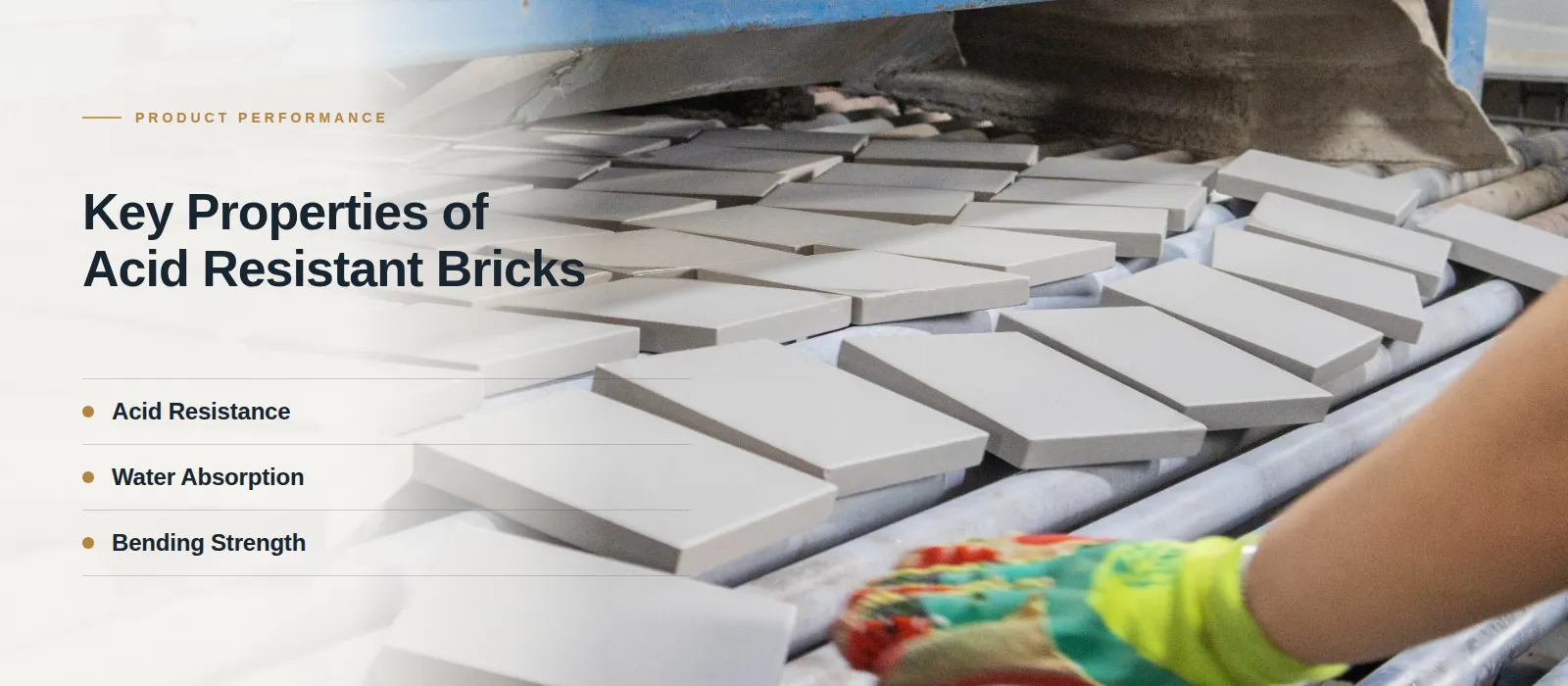
Product specifications help you compare suppliers and determine whether a brick meets your project requirements. Key properties such as acid resistance, water absorption, and bending strength should be reviewed, as they directly affect performance under chemical exposure and mechanical stress.
| Property | What to Check | Why It Matters |
|---|---|---|
| Acid resistance | REBO: ≥99.8% | Indicates high resistance in the specified acid resistance test; verify suitability for the actual chemicals and conditions. |
| Water absorption | REBO: ≤0.2% | Low water absorption helps limit liquid uptake by the brick body. |
| Bending strength | REBO: ≥58.8 MPa | Helps assess the brick’s resistance to bending stress under service conditions. |
| Bulk density | REBO: 2.3–2.5 g/cm³ | Helps compare the physical characteristics of different brick grades. |
| Dimensions and thickness | Confirm required sizes and available options | Affects floor layout, joint planning, and lining design. |
| Test standards | Check the applicable standard and test report | Helps verify the test method and reported results. |
| Quality inspection | Review inspection records and product consistency | Helps ensure the supplied products meet the agreed specifications. |
Choose the Right Brick Type, Surface and Thickness
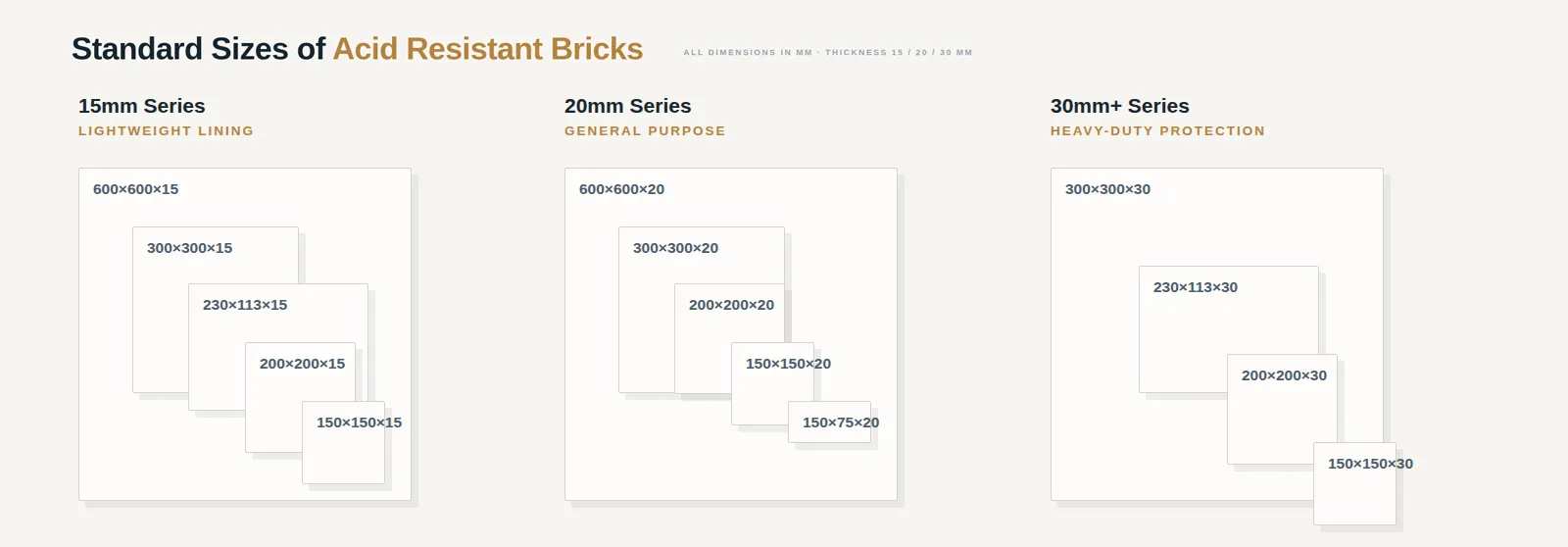
The correct product dimensions and surface finish depend on the application, installation design, and maintenance requirements. Reviewing the following factors together helps ensure the selected brick fits the installation method and supports efficient long-term maintenance.
Select Suitable Dimensions and Thickness
- Brick dimensions affect the number of joints, layout, cutting requirements, and installation time. Thickness should match the lining design and the expected service conditions.
- For heavy-traffic floors, a thicker brick alone won’t solve the problem. The supporting structure, mortar layer, and load distribution must also be suitable.
Compare Glazed and Unglazed Surfaces
- Glazed surfaces: Consider these when the specified chemical compatibility and cleaning requirements support their use. Confirm that the glaze and tile body are suitable for the intended exposure.
- Unglazed surfaces: Consider these when the selected product’s properties and surface characteristics meet the project’s requirements.
Check the Back Design
- Acid resistant tiles may have a grooved or flat back. The choice affects the contact surface between the tile and the installation mortar.
- Confirm that the selected back design is compatible with the specified mortar and installation method. Do not treat a grooved back as proof of a particular bonding strength without supporting data.
Consider Slip Resistance and Drainage
- Floors exposed to water, oils, or process chemicals may present slip hazards. Ask for relevant slip-resistance test results if the project has specific safety requirements.
- The floor should also have an appropriate drainage layout. Avoid designs that allow aggressive liquids to collect around joints, drains, and equipment foundations.
Select the Right Acid Resistant Mortar
Acid resistant bricks and mortar must work as a compatible system. Even a suitable acid resistant tile and brick can fail when the mortar cannot withstand the chemicals or operating conditions. When requesting acid resistant bricks, ask the supplier to confirm a suitable mortar option for your chemicals and operating temperature. Review the proposed brick and mortar combination before purchasing the full project quantity.
Confirm Chemical Compatibility
Different mortar formulations have different chemical and temperature limitations. Do not assume that one mortar is suitable for every acid resistant brick application.
Check Operating Temperature Limits
If hot liquids may spill onto the floor, include these conditions in the material selection process.
Pay Attention to Joints and Curing
Use the specified joint dimensions and installation procedure. Allow the mortar to cure for the required period before exposing the floor to chemicals, water, or traffic.
Prepare the Substrate Correctly
Follow the mortar manufacturer’s requirements for substrate preparation, mixing, application, and curing.
Match Acid Resistant Bricks to Different Industrial Area Floors
Different facilities have different chemical and mechanical requirements. Use the application to identify the main selection priorities. Take acid resistant flooring for a pickling area as example:
- Consider a pickling workshop with hydrochloric acid exposure, occasional liquid spills, and forklift traffic.
- Start by recording the hydrochloric acid concentration and operating temperature. Identify whether the floor experiences continuous exposure or only occasional splashes.
- Next, evaluate the mechanical loads and inspect the concrete substrate. Compare brick specifications and confirm the chemical compatibility of the proposed mortar.
- Finally, review the floor slope, drainage channels, joints, and installation details. This process helps establish a project-specific specification instead of selecting bricks based on acid resistance alone.
- For food processing areas, also verify the applicable hygiene and safety requirements. Chemical resistance alone does not establish food-contact suitability or compliance with food facility standards.
| Industrial Application | Main Concerns | Selection Priorities |
|---|---|---|
| Chemical processing plants | Chemical spills, aggressive liquids, and local pooling | Chemical compatibility, mortar resistance, and drainage |
| Pickling and galvanizing plants | Acid exposure, process spills, and material handling | Compatibility with the actual pickling chemicals, load conditions, and joint protection |
| Electroplating facilities | Process solutions, cleaning chemicals, and wet floors | Chemical compatibility, drainage, and suitable surface safety |
| Battery manufacturing facilities | Process-specific acids or alkalis, depending on the operation | Confirm the actual electrolyte and chemical exposure before selecting materials |
| Wastewater treatment plants | Variable liquid composition, wet conditions, and chemical treatment | Resistance to the actual process media, substrate condition, and drainage |
| Food processing facilities | Cleaning agents, washdown, moisture, and hygiene requirements | Compatibility with cleaning chemicals, cleanability, slip safety, and applicable hygiene requirements |
Common Mistakes When Choosing Acid Resistant Bricks for Industrial Flooring
Mistake 1: Selecting Bricks Based Only on Acid Resistance
Better approach: Evaluate the complete set of chemical and mechanical conditions before approving the product.
Mistake 2: Ignoring Mechanical Loads
Better approach: Provide the supplier or project engineer with the equipment weight, wheel load information, and traffic conditions.
Mistake 3: Choosing Unsuitable Mortar
Better approach: Confirm chemical compatibility, temperature limits, installation requirements, and curing conditions.
Mistake 4: Overlooking Drainage and Joints
Better approach: Review the floor slope, drains, joint layout, and areas where chemicals may accumulate.
Mistake 5: Installing over an Unstable Concrete Substrate
Better approach: Inspect and repair the substrate before installation. Investigate structural movement rather than simply covering the affected area.
Mistake 6: Ordering Before Confirming the Project Specification
Better approach: Confirm the product specification, mortar selection, required test documentation, quantity, and delivery schedule before placing the order.
How to Choose a Reliable Acid Resistant Brick Supplier
A reliable supplier should help you evaluate product suitability, not simply provide a price per brick. This means asking about your operating conditions, reviewing technical specifications against your requirements, and offering practical advice on installation and maintenance. A supplier who understands your application can help you avoid costly mistakes and choose a brick that performs reliably over the long term.
Check the following points before making a purchasing decision.
- Product specifications: Request clear data for acid resistance, water absorption, bending strength, dimensions, and other relevant properties.
- Test documentation: Confirm the test methods, applicable standards, and availability of inspection reports.
- Product options: Check the available dimensions, thicknesses, surface finishes, and back designs.
- Mortar compatibility: Ask whether the supplier can recommend a suitable mortar for your operating conditions.
- Quality control: Confirm how the supplier checks dimensions, appearance, and product consistency before shipment.
- Project supply capability: Verify the production lead time, packaging, shipping arrangements, and ability to meet the required quantity.
Also confirm whether the supplier can provide the standards and documentation specified in your project requirements. Do this before finalizing the order.
Why Consider REBO for Your Project?
REBO supplies acid resistant bricks and tiles for industrial corrosion protection applications. Product selection can begin with your actual operating conditions rather than a general product description. To help assess your project, provide the chemical media, concentration, operating temperature, mechanical loads, required dimensions, and estimated quantity. These details help establish which product specifications and mortar options need to be reviewed.
Frequently Asked Questions
Q:What Is the Best Acid Resistant Brick for Industrial Flooring?
Start by identifying the most aggressive chemical exposure. Then compare the relevant acid resistance data, bending strength, water absorption, dimensions, and mortar compatibility.
For floors exposed to both chemicals and forklifts, evaluate the entire lining system rather than relying on a single product specification.
Q: Can Acid Resistant Bricks Withstand Heavy Forklift Traffic?
Check the loaded forklift weight, wheel loads, traffic frequency, turning zones, and substrate condition. Brick strength alone does not determine the load capacity of the completed floor.
Ask the project engineer to verify the lining design for the expected loads.
Q: Which Mortar Should Be Used with Acid Resistant Bricks?
The selection also depends on the substrate, joint design, installation method, and curing requirements. Confirm the brick and mortar combination with the supplier before installation.
Q: Are Acid Resistant Bricks Suitable for Floors Exposed to Sulfuric Acid?
Do not assume that a brick suitable for dilute sulfuric acid will perform equally well in concentrated or hot sulfuric acid. Request relevant test data and verify the complete lining system.
Q: How Do You Prevent Acid Resistant Brick Floors from Cracking or Delaminating?
Use compatible mortar, follow the specified installation and curing procedures, and provide suitable joints and drainage. Investigate existing cracks or structural movement before installation.
Regularly inspect joints, loose bricks, and areas where chemicals collect. Repair damaged sections promptly to reduce the risk of further deterioration.