


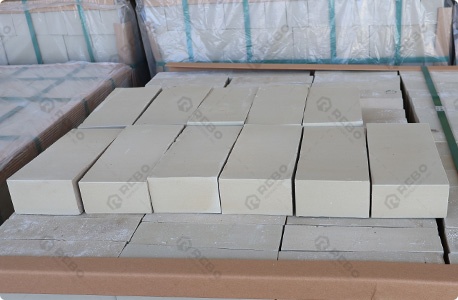
Steel pickling lines face continuous exposure to aggressive acids, splashes, and corrosive residues. Without reliable floor protection, acid penetration can damage concrete, weaken structural surfaces, and increase maintenance costs and production downtime. Acid resistant tiles for steel pickling lines provide a durable surface protection option for suitable areas, including pickling line floors, drainage channels, and acid collection pits.
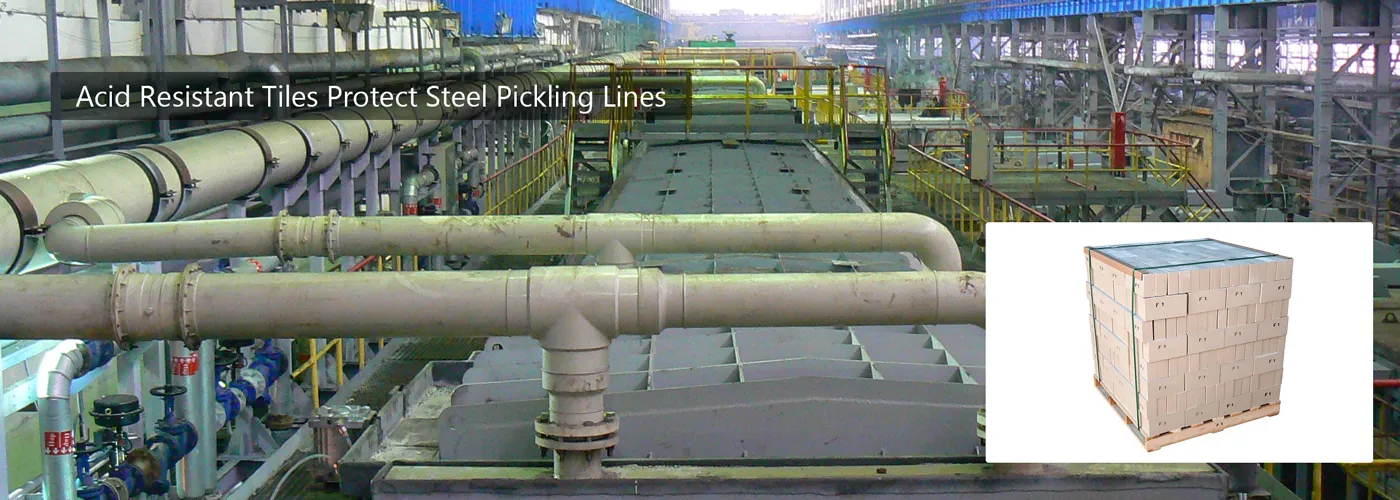
Why Is Corrosion Protection Critical in Steel Pickling Lines?
Steel pickling lines commonly use hydrochloric acid (HCl) or sulfuric acid (H₂SO₄) to remove oxide scale. Acid splashes, leaks, spills, and acidic condensate can damage concrete and compromise protective linings.
Reliable corrosion protection helps prevent concrete damage, reduce repair costs, and minimize unplanned downtime. Acid resistant brick and tiles can protect suitable areas when combined with compatible mortar, sealed joints, and a lining system designed for actual chemical and operating conditions.
Can Acid Resistant Tiles Withstand Pickling Line Conditions?
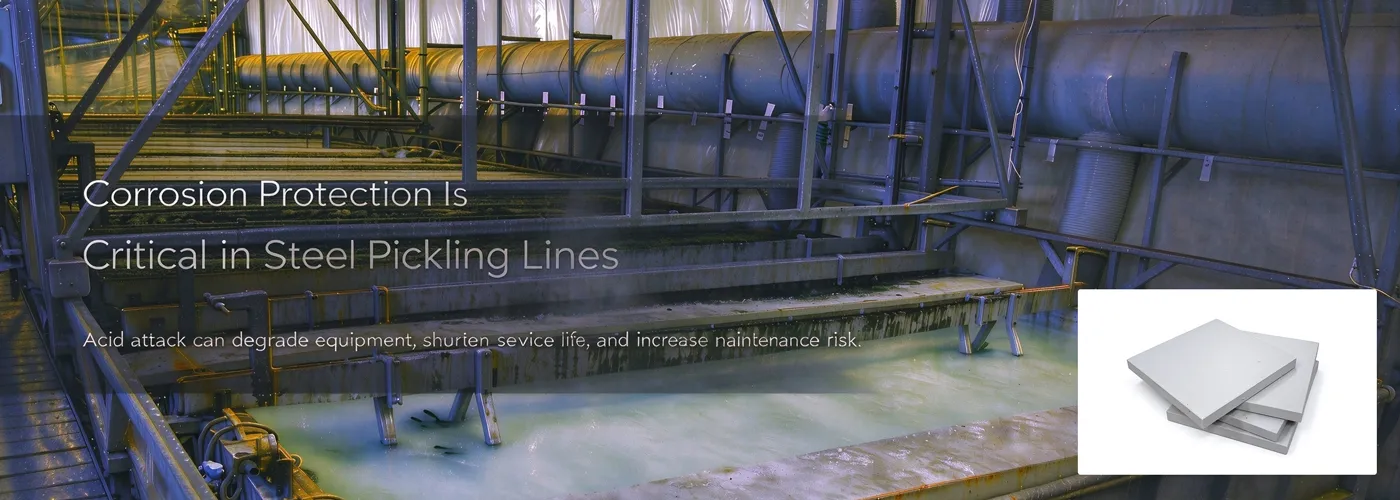
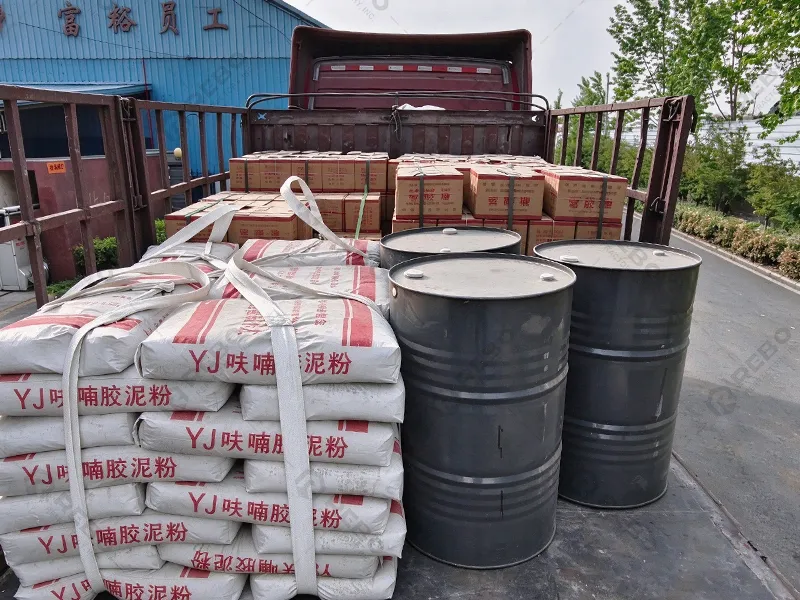
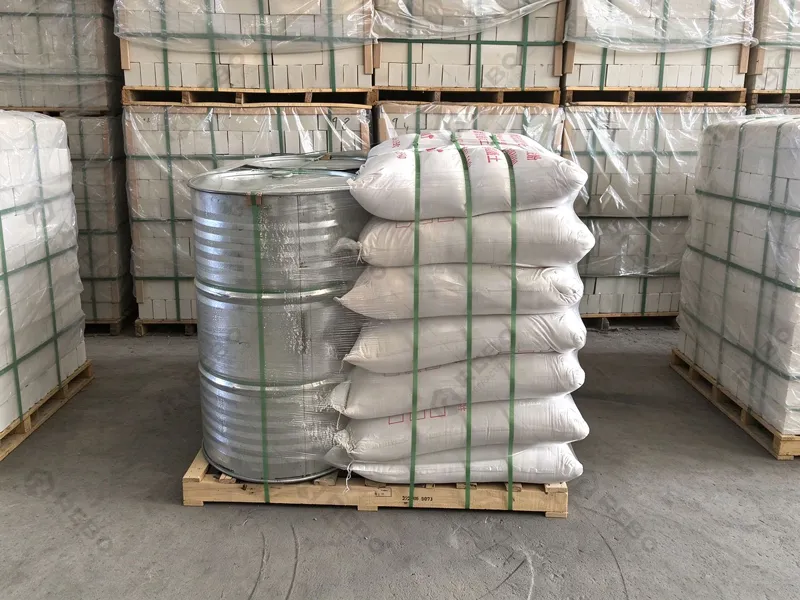
Yes. REBO Z-1 acid resistant tiles offer high acid resistance, low water absorption, and strong mechanical performance for suitable steel pickling applications. The complete lining system must match the actual chemical and operating conditions. REBO provides Z-1 acid resistant tile and acid resistant mortar (furan mortar, KP1 potassium silicate mortar).
- Reliable Product Specifications: Z-1 tiles feature ≥99.8% acid resistance and ≤0.2% water absorption.
- Multiple Product Options: Choose from different tile sizes, thicknesses, and shapes for specific lining requirements.
- Compatible Mortar Solutions: Source acid resistant tiles and matching mortar from one supplier.
- Project-Based Selection Support: REBO can assess your acid type, concentration, operating temperature, and installation requirements to help identify suitable materials.
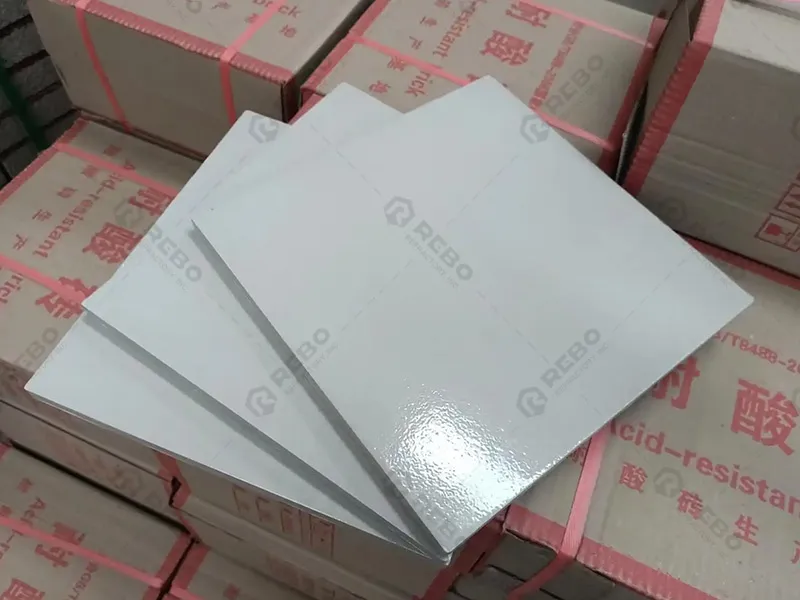
Where Can Acid Resistant Tiles Be Used in a Steel Pickling Line?
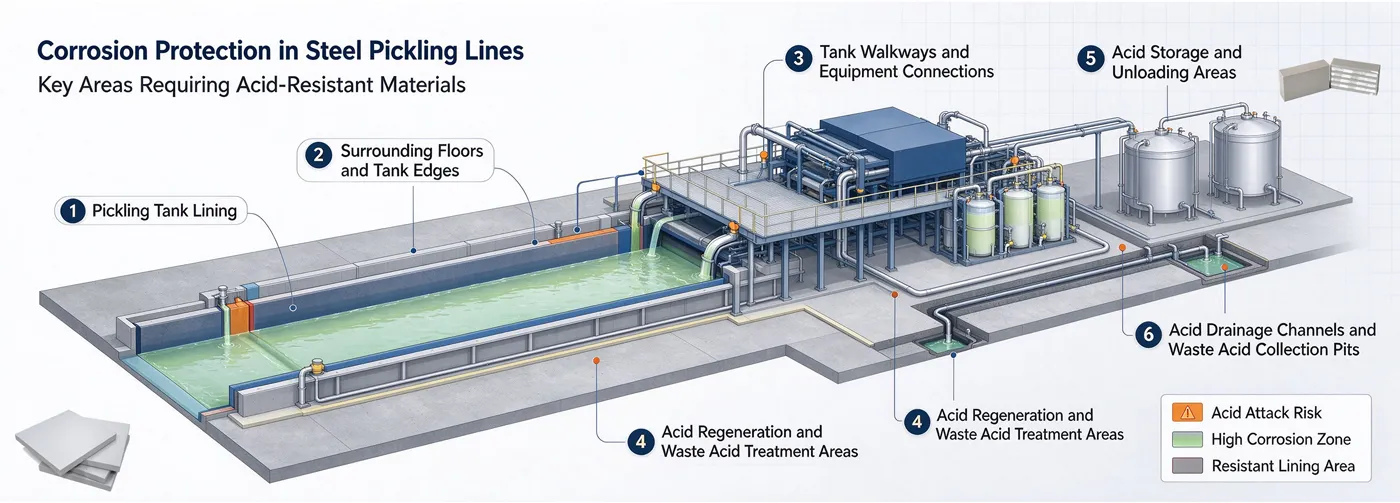
| Application Area | Main Corrosion Risks |
|---|---|
| Pickling Tank Lining | Direct contact with hydrochloric or sulfuric acid, continuous immersion, and temperature changes |
| Surrounding Floors and Tank Edges | Acid splashes, drips, capillary rise, and acidic condensate |
| Tank Walkways and Equipment Connections | Acid leaks, liquid accumulation, and joint leakage |
| Acid Regeneration and Waste Acid Treatment Areas | Acid leaks, acidic condensate, and localized chemical attack |
| Acid Storage and Unloading Areas | Acid leaks, unloading spills, and occasional acid exposure |
| Acid Drainage Channels and Waste Acid Collection Pits | Acid accumulation, prolonged contact, partial immersion, and joint leakage |
Acid Resistant Tiles vs. Resin Coatings for Pickling Lines
The final acid lining system selection depends on acid type, concentration, operating temperature, contact time, and mechanical loads. Consider substrate strength, surface condition, and installation requirements. Verify the chemical compatibility of mortar and joint materials. Evaluate maintenance needs, expected service life, installation costs, and downtime expenses. A comprehensive assessment helps identify a suitable corrosion protection solution and optimize total life-cycle costs.
- Acid resistant tiles: Suitable candidates for industrial floors, drainage channels, collection pits, and selected tank linings. They provide a rigid, wear-resistant surface.
- Resin coatings: Suitable candidates for areas requiring a continuous, joint-free surface and specific coating configurations.
| Comparison Factor | Acid Resistant Tiles | Resin Coatings |
|---|---|---|
| Chemical Resistance | Suitable for many hydrochloric and sulfuric acid environments. Verify compatibility with the tile, mortar, and joints. | Epoxy and vinyl ester systems suit specific acid environments. Resistance depends on resin formulation and chemical exposure. |
| Service Temperature | Typical applications: -20 to 100°C. The complete lining system may be limited by the mortar. | Epoxy: approx. -20 to 60°C; vinyl ester: approx. -20 to 100°C. Verify product limits. |
| Mechanical Resistance | Good wear resistance; vulnerable to impact and substrate movement. | Continuous surface; vulnerable to impact, abrasion, and substrate cracking. |
| Joint and Leakage Control | Depends on mortar, joint sealing, and detail workmanship. | Seamless when properly applied; pinholes, cracks, and delamination can cause leakage. |
| Repair and Maintenance | Local tile replacement and joint repair are usually possible. | Local repairs are possible with compatible materials and proper surface preparation. |
| Installation and Downtime | Requires tile laying, joint filling, and curing. | Requires surface preparation, coating application, and curing. |
How to Choose the Right Acid Resistant Tiles for a Pickling Line
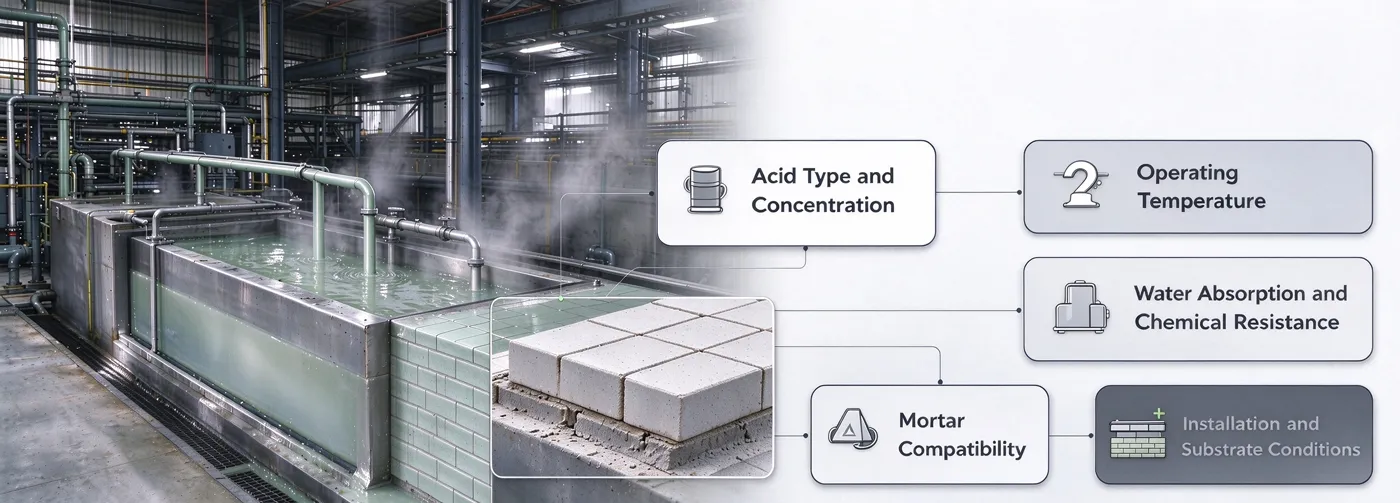
Do not select acid resistant tiles by price or water absorption alone. Evaluate chemical resistance, operating conditions, mortar compatibility, installation requirements, and long-term maintenance costs. These factors help ensure reliable corrosion protection and reduce the risk of premature lining failure.
- Acid Type and Concentration
Identify the actual acid medium, including hydrochloric acid, sulfuric acid, or mixed acids. Confirm the operating concentration and potential changes during production. Verify the chemical resistance of the complete lining system. - Operating Temperature
Check normal operating temperature, maximum temperature, and temperature fluctuations. Consider thermal shock and temperature differences between the acid and substrate. Both tiles and mortar must meet the required service conditions. - Water Absorption and Chemical Resistance
Check tile water absorption, acid resistance, and relevant test data. Low water absorption helps limit liquid penetration. Confirm the test conditions and results before comparing products. - Mortar Compatibility
Select mortar based on acid type, concentration, temperature, and exposure conditions. Evaluate chemical resistance, bonding strength, and curing requirements. Furan, KP1 potassium silicate, and epoxy mortars serve different applications. Verify compatibility before installation. - Installation and Substrate Conditions
Inspect substrate strength, surface condition, and moisture levels. Check drainage slopes, joint design, corners, and pipe penetrations. Follow the specified installation and curing procedures to reduce leakage risks.
Why Choose REBO Acid Resistant Tiles for Steel Pickling Projects?
REBO provides acid resistant tile solutions for steel pickling facilities. We support product selection, mortar matching, and project supply based on actual operating conditions.
- Product Specifications: Access tile sizes, thicknesses, and key technical data for project evaluation.
- Chemical Resistance Data: Review available test reports and technical documentation for relevant chemical exposure conditions.
- Mortar Compatibility: Get support with evaluating furan, KP1 potassium silicate, and epoxy mortars for specific applications.
- Project-Based Material Selection: Assess acid type, concentration, operating temperature, and installation location to identify suitable lining options.
- Application Coverage: Explore solutions for pickling tank linings, surrounding floors, drainage channels, collection pits, and acid storage areas.
- Supply Coordination: Coordinate product quantities, specifications, packaging, and delivery schedules according to project requirements.
- Technical Support: Clarify installation conditions, joint design, substrate preparation, and maintenance considerations before procurement.